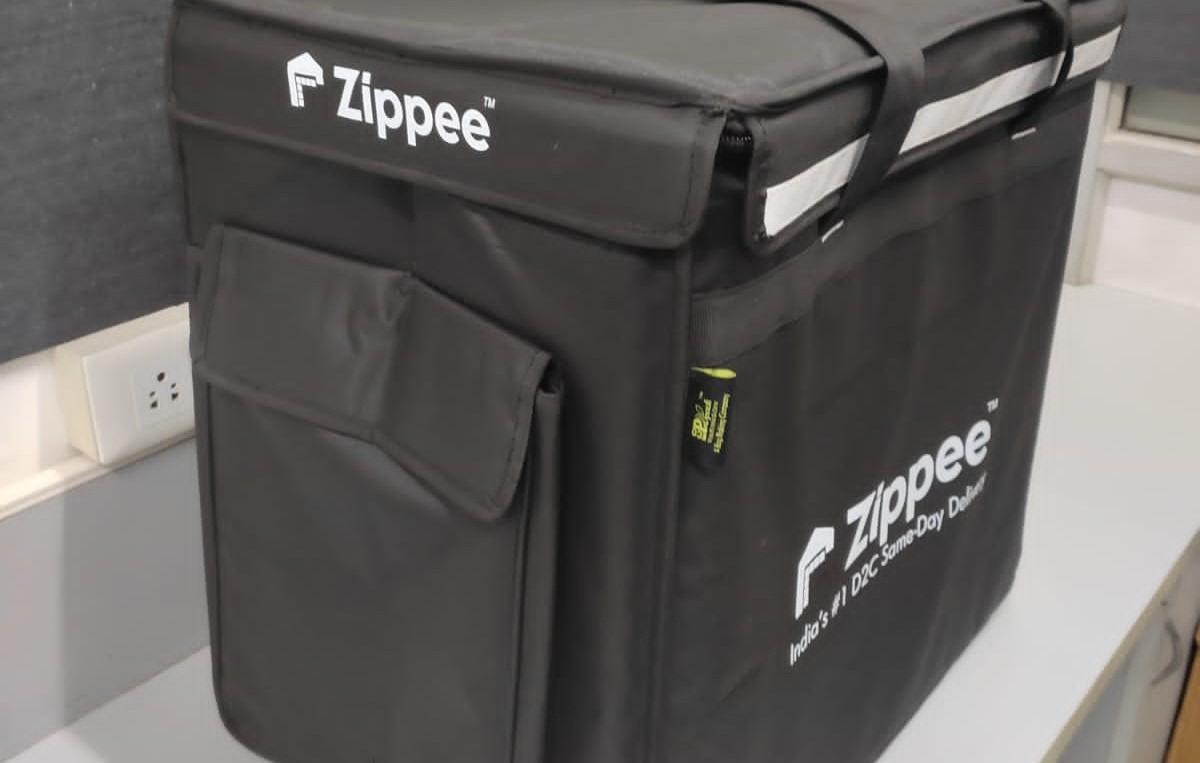
Eco-Friendly Quick Commerce - D2C Low-Carbon Fast Delivery
Speed and sustainability are not opposites. But the way most brands are chasing quick commerce right now, you'd think they were.
Every brand racing to offer 10-minute or 30-minute delivery is making bets on inventory positioning, routing density, and fulfillment cost per order. Very few are asking what that race is doing to their carbon ledger. Not because they don't care, but because no one has made the tradeoff visible. That's the gap this post tries to close.
Why Delivery Density, & Not Delivery Speed - Determines Your Carbon Footprint
The Emissions Gap Between High-Density and Low-Density Last-Mile Operations
Here's the uncomfortable starting point: hyperlocal delivery, done right, is more carbon-efficient than next-day or 2-day logistics. Done wrong, it's a disaster.
The difference comes down to one variable: delivery density.
A single delivery executive completing 15-18 drops per shift in a 3km radius generates a fraction of the per-order emissions of a courier van completing 8 drops across 40km. The problem is that most quick commerce operations are not hitting that density. They're running half-loaded vehicles, poorly clustered routes, and burning fuel to compensate for weak inventory positioning.
Why Most Quick Commerce Players Are Getting the Math Wrong
According to estimates from logistics consultancy Redseer (directional, based on 2022-23 urban delivery data), last-mile delivery in India accounts for roughly 30-35% of total supply chain emissions for an e-commerce order. For quick commerce, that number shifts dramatically based on drop density and vehicle type.
The math is simple. The execution is not.
Dark Stores as a Sustainability Tool - But Only With the Right Location Logic
The dark store model is often pitched as a cost play. It is also, structurally, a sustainability play, but only when the location logic is sound.
What a Well-Placed Dark Store Does for Emissions
A dark store placed correctly within a dense residential or commercial cluster does three things:
- Eliminates the long-haul leg from a central warehouse to the customer
- Enables bicycle and EV last-mile delivery at viable cost
- Reduces failed delivery attempts (more on this below)
How Poor Catchment Design Hides Inefficiency in the Network
A dark store placed incorrectly, with too large a catchment, wrong pin code mix, or poor SKU depth, forces the same delivery executive to cover more ground per order. You haven't shortened the mile. You've just hidden it inside a different part of the network.
Zippee currently operates dark stores across 21 cities including Delhi NCR, Mumbai, Bengaluru, and Hyderabad. The site selection process is driven by order density data, not real estate availability. That distinction matters more than most brands realize.
RTO Rates: The Scope 3 Emissions Variable Most Brands Are Ignoring
Return-to-origin rates in Indian e-commerce run between 25-35% for fashion and 8-15% for health and wellness categories (industry estimates, varying by channel and brand). Each RTO is a round trip that generates emissions with zero commercial value.
Why Hyperlocal Fulfillment Structurally Lowers Return Intent
Hyperlocal D2C fulfillment tends to drive RTO rates significantly lower for a simple reason: when a customer orders something for same-day delivery, they are home. They wanted it now. The behavioral intent is different from someone who placed an order on impulse at midnight and has since changed their mind.
Zippee's network consistently delivers RTO rates well below category averages for brands running same-day delivery through our infrastructure. Lower RTO is not just a P&L win. It directly reduces the carbon cost of fulfillment by eliminating unnecessary return legs.
If your brand is serious about scope 3 emissions, your RTO rate belongs in that calculation.
A Working Framework to Benchmark Your Fulfillment Carbon Footprint
Most brands have no baseline. Here is a working framework to get one.
| Metric | Worse Brenchmark | Better Benchmark | What Drives the Gap |
| CO2 per delivered order | 350-500g | 80-150g | Drop density, vehicle type, route optimization |
| RTO rate | 25-35% | 6-12% | Delivery intent, address accuracy, hyperlocal placement |
| Drops per DE per shift | 8-10 | 15-20 | Catchment size, order clustering, time slot management |
| % last-mile EV/cycle | 0-10% | 40-70% | Dark store proximity to customer, fleet investment |
| Avg. delivery distance | 8-15 km | 2-4 km | Inventory positioning relative to demand clusters |
* Benchmarks are directional estimates based on publicly available Indian urban logistics data and Zippee operational observations.
The brands in the 'better' column are not running fundamentally different operations. They have made deliberate choices about where to stock inventory and how to cluster orders before dispatch.
What EV-Friendly Fulfillment Actually Requires Before You Switch Fleets
The Three Conditions That Make Electric Last-Mile Delivery Viable
There is a growing conversation about EV fleets in quick commerce. It is mostly incomplete.
EVs work for last-mile delivery when the radius is under 5km, the vehicle is loaded appropriately per trip, and charging infrastructure is co-located with the dark store. Take away any of those three conditions and the operational math breaks down faster than the environmental benefit materializes.
The implication for D2C brands is that EV-friendly fulfillment is not something you bolt on. It is something you architect. It requires your 3PL or fulfillment partner to have made investments in facility placement and fleet management before you signed the contract.
If your current fulfillment partner cannot tell you what percentage of their last-mile fleet in your top cities is electric or non-motorized, that is an answer in itself.
Building Low-Emission Fulfillment Into the Infrastructure Layer, Not the Marketing Layer
Sustainability in quick commerce logistics India is not a marketing position for us. It is an operational design principle that affects how we select dark store locations, how we cluster orders, and how we think about delivery density as a business metric.
When a brand like Epigamia or HealthKart plugs into Zippee's network for same-day delivery, they inherit a set of infrastructure decisions that have already been made with density and efficiency in mind. They are not starting from scratch. They are extending their inventory into a network that was built to serve urban demand clusters, not to replicate the hub-and-spoke model at smaller scale.
The practical outcome: lower emissions per delivered order, lower RTO, and a same-day delivery capability that does not require them to build and operate their own dark store fleet.
D2C fulfillment at scale should not come with a large carbon trade-off. The brands that figure out this equation early will have a genuine and durable advantage, not just on cost, but on the ability to make credible sustainability claims to an increasingly conscious consumer base.
Fast and Sustainable Fulfillment Isn't a Trade-Off - It's an Architecture Decision
Quick commerce logistics in India is at an inflection point. The brands investing now in where their inventory sits, how it moves, and how often it fails to reach a customer are making decisions that will compound over the next five years, financially and environmentally.
Zippee is not a delivery vendor. We are fulfillment infrastructure for D2C brands that want to compete on speed without building the underlying network themselves. That infrastructure was designed with density, efficiency, and low RTO as first principles, which also happen to be the building blocks of a lower-emission operation.
The choice between fast and sustainable is largely false. But it requires your logistics stack to have been built with both in mind.
Ready to turn your fulfillment into a competitive advantage?


.jpg&w=256&q=75)
.jpg&w=256&q=75)


.jpg&w=256&q=75)


